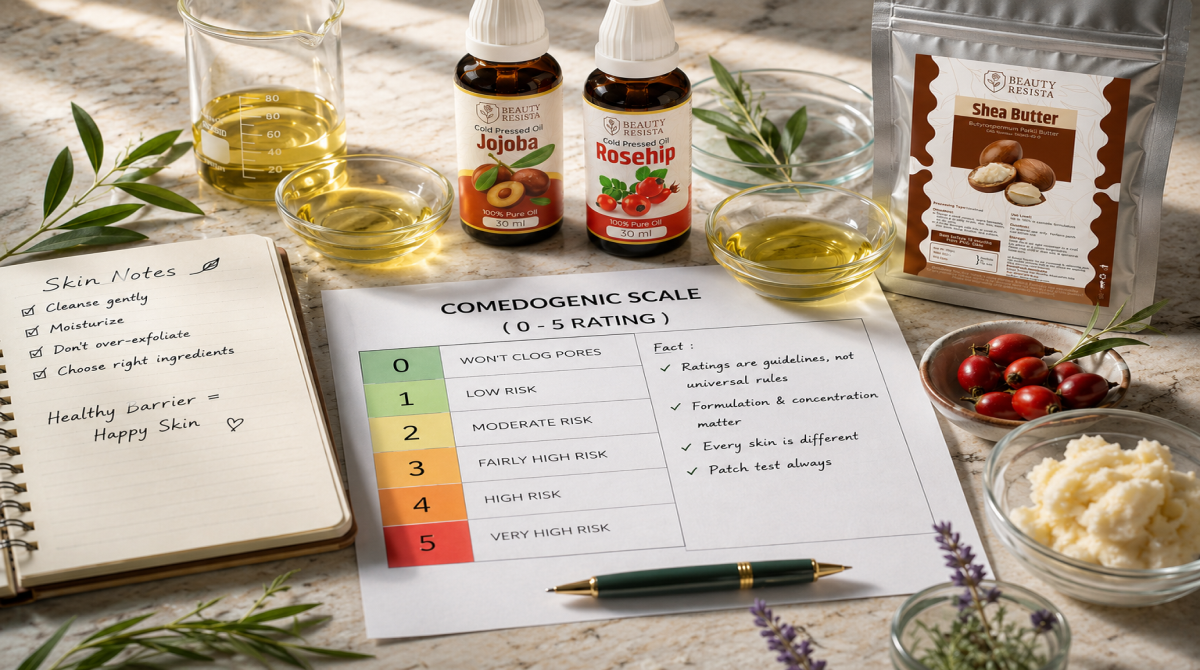
Comedogenic ratings rank skincare ingredients on a scale of 0 to 5 based on their likelihood of clogging pores. While intended to help acne-prone individuals choose safe products, the reality is more nuanced.
Comedogenic ratings are guidelines—not universal rules.
Your skin type, formulation, concentration, ingredient combinations, and even climate can completely change how a product behaves on your skin.
Let’s separate myths from facts so you can confidently choose skincare ingredients that truly suit your skin.
The comedogenic scale assigns numbers to ingredients to guide consumers:
- 0-1 (Non-comedogenic): Unlikely to clog pores (e.g., Squalane, Aloe Vera).
- 2 (Slightly comedogenic): Usually fine, but can cause congestion for some.
- 3-5 (Moderately to highly comedogenic): Higher risk of blocking follicles (e.g., Cocoa Butter, Isopropyl Myristate).
However, relying strictly on this scale can lead to skincare frustrations. Let’s break down the myths surrounding it:
Myth 1: “Non-Comedogenic” means acne-proof.
The Reality: The terms “non-comedogenic” or “non-acnegenic” are largely unregulated by the FDA. Any cosmetic brand can place this label on their packaging without passing standardized, universal testing. A product can proudly boast this label yet still cause breakouts for you.
Myth 2: Ingredients rated “4” or “5” will ruin your skin.
The Reality: Comedogenicity is heavily dependent on concentration and formulation context. Ingredients tested in a laboratory are often applied at 100% concentration, whereas in a finished product, they might be heavily diluted (e.g., at 1%). Furthermore, ingredients like emulsifiers and penetration enhancers interact to alter the pore-clogging potential of the final product.
What Does “Comedogenic” Mean?
A comedone is a clogged hair follicle.
It appears as:
- Blackheads
- Whiteheads
- Closed comedones
- Acne bumps
A comedogenic ingredient has the potential—not the certainty—to contribute to pore blockage under certain conditions.
This doesn’t automatically mean it causes acne.
Myth #1: Higher Rating Means You Will Break Out
Reality: False
Skin reacts differently depending on:
- Sebum production
- Genetics
- Skin barrier health
- Climate
- Hormones
- Overall skincare routine
Many people successfully use ingredients with moderate ratings without experiencing clogged pores.
Myth #2: Natural Oils Always Cause Acne
Reality: False
Natural plant oils differ dramatically in their fatty acid profiles.
Some contain more:
- Linoleic acid
- Oleic acid
- Palmitic acid
- Stearic acid
These differences influence how they feel and perform on the skin.
For example:
Lower-risk facial oils
- Rosehip Oil
- Grapeseed Oil
- Hemp Seed Oil
- Squalane
- Sunflower Oil (high-linoleic)
These are often preferred for oily or acne-prone skin because they’re lightweight and absorb relatively quickly.
Richer nourishing oils
- Avocado Oil
- Sweet Almond Oil
- Argan Oil
- Jojoba Oil
These work wonderfully for:
- Dry skin
- Mature skin
- Barrier repair
- Normal skin
Many acne-prone users also tolerate them well depending on formulation.
Myth #3: Coconut Oil Is Bad for Everyone
Reality: It Depends
Pure coconut oil may not suit many acne-prone faces due to its richer texture.
However, it can still be excellent for:
- Body care
- Hair care
- Dry elbows
- Feet
- Overnight masks
One ingredient doesn’t determine whether an entire skincare product is suitable.
Myth #4: Oils Cause Acne
Reality: Acne Is Multifactorial
Breakouts can result from:
- Hormonal changes
- Bacteria
- Excess sebum
- Dead skin buildup
- Inflammation
- Barrier damage
- Poor cleansing
- Certain medications
Blaming facial oils alone oversimplifies acne.
Sometimes removing all oils actually damages the skin barrier and makes acne worse.
What Actually Determines Whether a Product Clogs Pores?
Several factors matter more than a simple comedogenic rating.
1. Entire Formulation
Two products containing the same oil may perform completely differently because of:
- Emulsifiers
- Humectants
- Silicones
- Active ingredients
- Preservatives
- Texture modifiers
Formulation matters far more than one ingredient.
2. Ingredient Percentage
An ingredient present at:
1%
behaves very differently from the same ingredient at:
60%
Concentration changes performance.
3. Skin Type
Oily Skin
Usually prefers:
- Lightweight oils
- Fast-absorbing formulations
- Gel moisturizers
Dry Skin
Benefits from:
- Richer oils
- Occlusive moisturizers
- Barrier-supporting lipids
Combination Skin
Often benefits from layering lighter oils during the day and richer products at night.
4. Climate
Hot, humid weather:
- Increases sweat
- Increases oil production
Cold climates:
- Increase water loss
- Need richer moisturizers
An oil that feels heavy in summer may feel perfect during winter.
Ingredients That Support Acne-Prone Skin
Look for ingredients such as:
- Niacinamide
- Panthenol
- Ceramides
- Green Tea Extract
- Centella Asiatica
- Zinc PCA
- Salicylic Acid (BHA)
- Azelaic Acid
- Allantoin
These help support the skin barrier while addressing oiliness and blemishes.
Beauty Resista Ingredients That Pair Beautifully for Different Skin Types
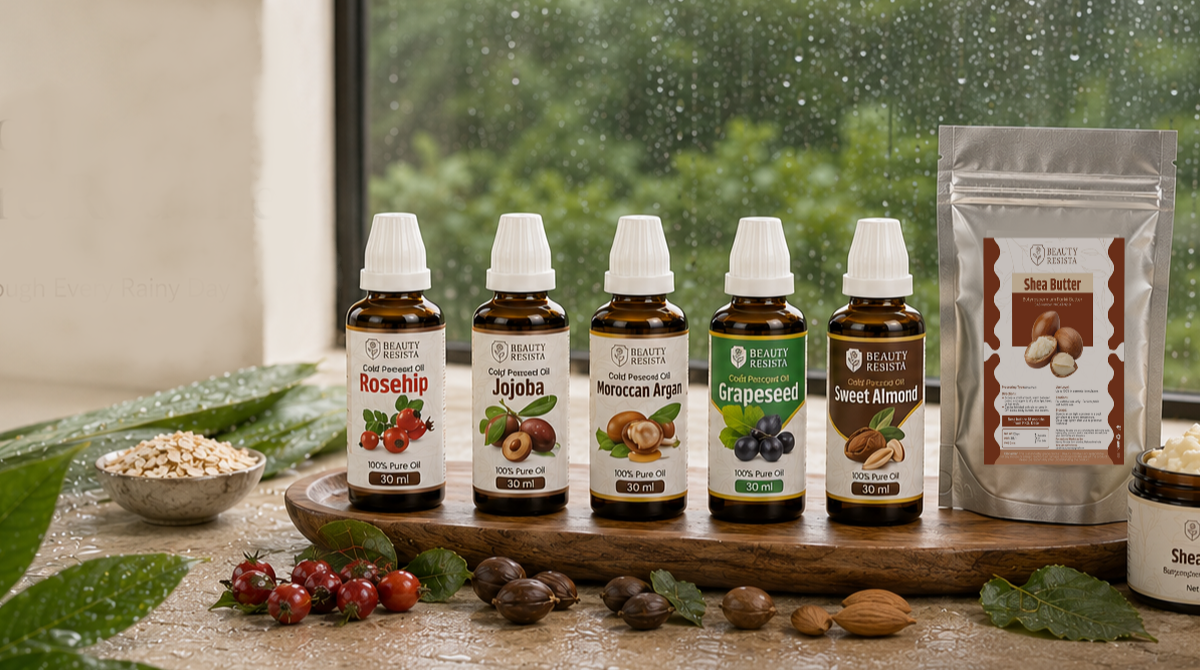
At Beauty Resista, we believe skincare should be selected based on skin needs rather than internet myths. Our ingredient-first approach encourages thoughtful formulation instead of relying on a single comedogenic number.
For Oily & Combination Skin
Consider lightweight botanical oils such as:
- Rosehip Oil
- Grapeseed Oil
- Jojoba Oil
Pair them with:
- Niacinamide
- Panthenol
- Aloe Vera
- Hyaluronic Acid
For Dry & Dehydrated Skin
Create nourishing blends using:
- Sweet Almond Oil
- Argan Oil
- Avocado Oil
- Shea Butter
Combine with:
- Ceramides
- Squalane
- Oat Extract
- Glycerin
For Mature Skin
Excellent ingredients include:
- Rosehip Oil
- Argan Oil
- Sea Buckthorn Oil
- Frankincense Essential Oil (properly diluted)
Add complementary actives such as:
- Peptides
- Bakuchiol
- Coenzyme Q10
- Vitamin E
How to Prevent Clogged Pores
Instead of fearing one ingredient, build healthy skincare habits:
- Cleanse gently without over-stripping the skin.
- Remove sunscreen and makeup thoroughly at night.
- Exfoliate 1–2 times a week with suitable chemical exfoliants if your skin tolerates them.
- Avoid layering too many heavy products.
- Introduce one new product at a time so you can identify how your skin responds.
- Moisturize consistently to support the skin barrier.
- Patch test new oils, serums, and DIY formulations before regular use.
- Choose products based on your skin type, climate, and overall routine—not just a comedogenic chart.
- Frequently Asked Questions
- Is jojoba oil non-comedogenic?
- Jojoba oil is generally regarded as having a low comedogenic potential and is well tolerated by many skin types, although individual responses can vary.
- Can acne-prone skin use facial oils?
- Yes. Many people with acne-prone skin successfully use lightweight botanical oils as part of a balanced skincare routine. The right choice depends on your skin and the overall formulation.
- Should I avoid every ingredient with a rating above 2?
- Not necessarily. Comedogenic ratings are only one factor to consider. Concentration, formulation, and your unique skin characteristics often have a greater influence on whether a product suits you.
- Can a non-comedogenic product still cause breakouts?
- Yes. Breakouts may be triggered by irritation, allergies, hormones, overuse of products, or ingredients unrelated to pore clogging.