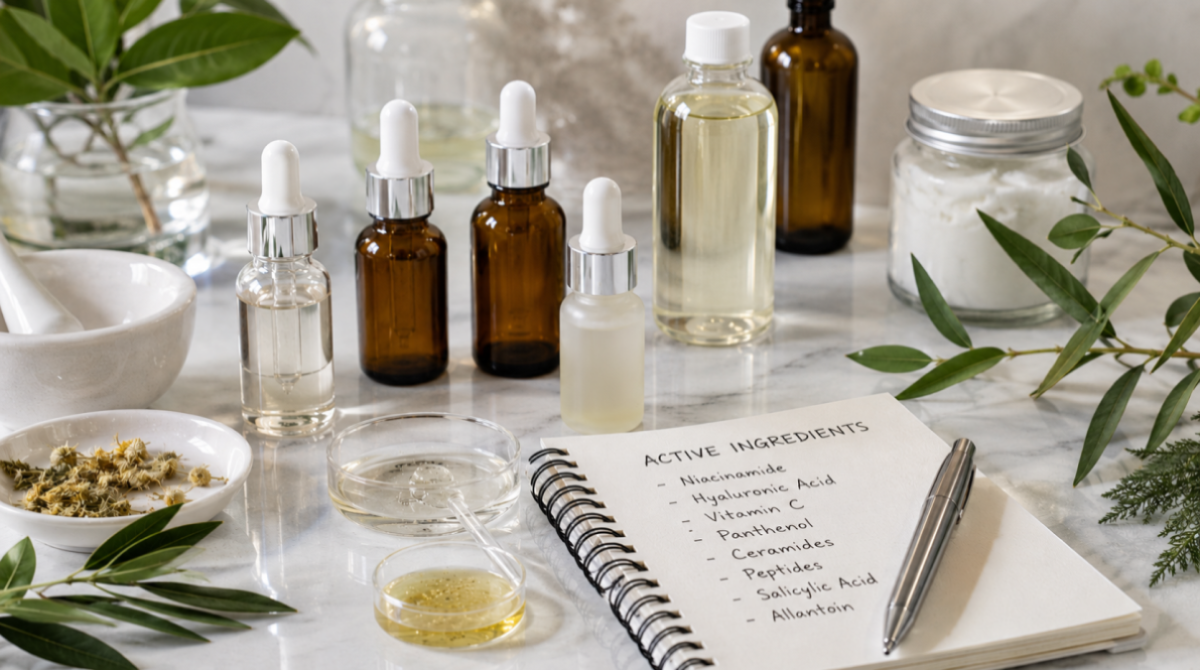
Have you ever wondered why some functional active ingredients transform your skincare routine while others show little effect? Whether you’re making homemade skincare products or simply trying to understand cosmetic formulations, knowing the role of functional active ingredients is essential.
Unlike carrier oils or base ingredients, functional active ingredients are incorporated into cosmetic formulations to deliver specific skin benefits such as hydration, brightening, anti-aging, soothing inflammation, acne control, or improving the skin barrier. In DIY cosmetics, selecting the right active ingredients can significantly improve the effectiveness of your formulations while ensuring they remain safe and skin-friendly.
This guide explains what functional active ingredients are, how they work, and how to use them correctly in DIY skincare.
What Are Functional Active Ingredients?
Functional active ingredients are compounds added to cosmetic products because they perform a measurable biological or cosmetic function on the skin.
They differ from base ingredients like water, oils, waxes, and emulsifiers, whose primary purpose is to build the product rather than directly improve skin health.
These ingredients are scientifically studied for their ability to improve skin appearance and function.
Why Functional Active Ingredients Are Important in DIY Cosmetics
When making DIY skincare products, many people focus only on natural oils and herbal extracts. While these ingredients have benefits, they often lack the potency of properly selected active ingredients.
Adding suitable functional active ingredients allows DIY formulations to:
Improve skin hydration
Reduce pigmentation
Minimize wrinkles
Calm irritated skin
Control acne
Strengthen the skin barrier
Improve skin texture
Increase elasticity
This makes homemade cosmetics more effective and results-driven.
Types of Functional Active Ingredients
Hydrating Active Ingredients
Hydration is one of the most important aspects of healthy skin.
Popular hydrating ingredients include:
Hyaluronic Acid
Sodium PCA
Glycerin
Betaine
Urea
Panthenol
These ingredients attract water into the skin and reduce moisture loss.
Skin Barrier Repair Ingredients
The skin barrier protects against moisture loss and environmental damage.
Common barrier-supporting ingredients include:
Ceramides
Cholesterol
Fatty Acids
Squalane
Panthenol
Colloidal Oatmeal
These ingredients are especially beneficial for dry, sensitive, or damaged skin.
Brightening Active Ingredients
Brightening ingredients help reduce uneven skin tone and pigmentation.
Examples include:
Niacinamide
Vitamin C
Alpha Arbutin
Licorice Extract
Tranexamic Acid
Kojic Acid
Regular use can improve dullness and post-inflammatory pigmentation.
Anti-Aging Active Ingredients
These ingredients target wrinkles, collagen loss, and reduced skin elasticity.
Examples include:
Retinol
Bakuchiol
Peptides
Coenzyme Q10
Vitamin E
Matrixyl Peptides
They stimulate collagen production and improve skin firmness.
Exfoliating Active Ingredients
Chemical exfoliants remove dead skin cells and improve texture.
Examples include:
Glycolic Acid
Lactic Acid
Mandelic Acid
Salicylic Acid
Gluconolactone (PHA)
Proper concentration and pH are essential for safe use.
Soothing Ingredients
Ideal for sensitive or irritated skin.
Examples:
Allantoin
Bisabolol
Centella Asiatica Extract
Panthenol
Aloe Vera Extract
Beta Glucan
These reduce redness and support skin healing.
How Functional Active Ingredients Work
Different ingredients work through different biological mechanisms.
Hydrators
Increase water retention within the skin.
Antioxidants
Neutralize free radicals responsible for premature aging.
Exfoliants
Promote skin cell turnover by dissolving dead skin cells.
Barrier Repair Ingredients
Restore the lipid matrix between skin cells.
Brightening Ingredients
Reduce melanin production or inhibit pigment transfer.
Choosing Functional Active Ingredients for Your Skin Type
Dry Skin
Recommended ingredients:
Hyaluronic Acid
Panthenol
Ceramides
Squalane
Betaine
Oily Skin
Recommended ingredients:
Niacinamide
Zinc PCA
Salicylic Acid
Green Tea Extract
Sensitive Skin
Choose:
Allantoin
Panthenol
Beta Glucan
Oat Extract
Centella Asiatica
Avoid strong acids until tolerance develops.
Acne-Prone Skin
Helpful ingredients include:
Salicylic Acid
Niacinamide
Azelaic Acid
Zinc PCA
Mature Skin
Best choices:
Peptides
Retinol
Ceramides
Coenzyme Q10
Vitamin C
Best Functional Active Ingredients for DIY Cosmetic Formulations
Ingredient
Typical Usage Level
Main Benefit
Niacinamide
2–5%
Brightening, barrier repair
Panthenol
1–5%
Hydration, soothing
Hyaluronic Acid
0.1–1%
Moisture retention
Allantoin
0.2–0.5%
Calming irritation
Ceramides
0.2–2%
Barrier support
Sodium PCA
1–5%
Hydration
Vitamin E
0.2–1%
Antioxidant
Coenzyme Q10
0.1–1%
Anti-aging
Betaine
2–5%
Moisturizing
Green Tea Extract
1–5%
Antioxidant
Safety Considerations When Using Functional Active Ingredients
DIY skincare requires more than mixing ingredients together. Follow these safety practices:
Always check the recommended usage level.
Measure ingredients accurately with a digital scale.
Maintain the correct formulation pH where required.
Patch test every new formulation.
Avoid mixing incompatible active ingredients without proper research.
Use preservatives in water-based products.
Store products in clean, sanitized containers.
Common Mistakes in DIY Cosmetics
Many beginners unknowingly reduce the effectiveness of their formulations by:
Adding too many active ingredients.
Using incorrect concentrations.
Ignoring ingredient compatibility.
Skipping preservative systems.
Using unstable ingredients improperly.
Forgetting pH adjustments.
Simple formulations with a few well-chosen actives often perform better than overly complex recipes.
Benefits of Functional Active Ingredients
Using scientifically supported active ingredients can help:
Improve hydration
Strengthen the skin barrier
Reduce pigmentation
Calm redness
Improve elasticity
Support collagen production
Minimize acne
Enhance overall skin appearance
When used correctly, these ingredients provide targeted benefits beyond what base ingredients alone can achieve.
Frequently Asked Questions
Can beginners use functional active ingredients in DIY skincare?
Yes. Beginners should start with beginner-friendly ingredients such as panthenol, glycerin, niacinamide, and hyaluronic acid while following recommended usage levels.
Are natural ingredients considered active ingredients?
Some botanical extracts have active properties, but not all natural ingredients function as cosmetic actives. Their effectiveness depends on concentration, extraction method, and supporting scientific evidence.
Can I mix multiple active ingredients together?
Some combinations work well, while others require careful formulation. Always verify ingredient compatibility, pH requirements, and recommended concentrations before combining active ingredients.
Do active ingredients work immediately?
Certain ingredients like humectants provide quick hydration, whereas others—such as niacinamide, peptides, or retinol—typically require consistent use over several weeks for visible results.