What Is the Skin Barrier?
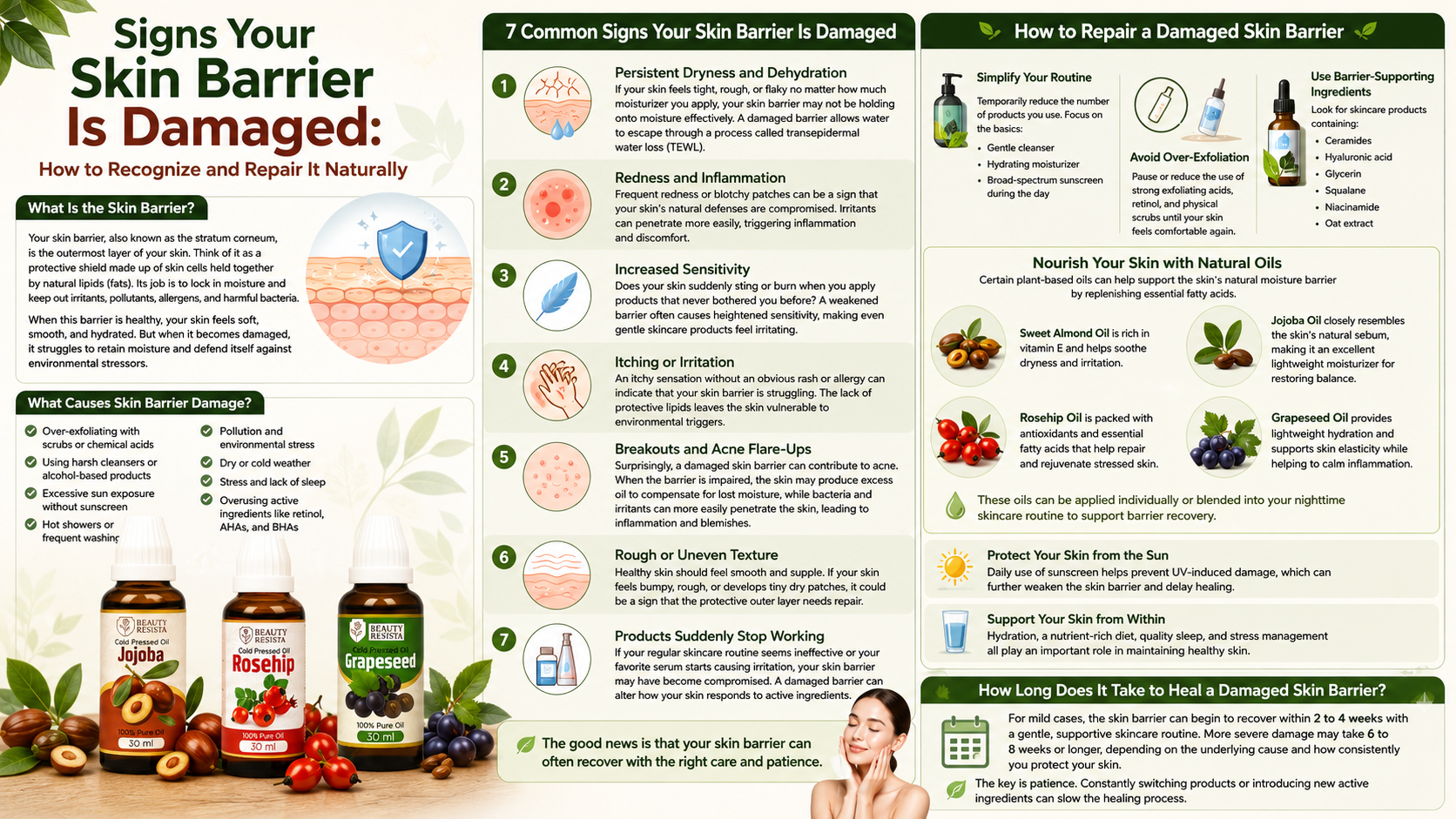
A damaged skin barrier is one of the most common yet overlooked causes of dryness, sensitivity, irritation, redness, and breakouts. Your skin barrier acts as the body’s first line of defense, helping lock in moisture while protecting your skin from pollution, allergens, harsh weather, and harmful microorganisms.
When your skin barrier is damaged, moisture escapes more easily, leaving your skin dehydrated and vulnerable to irritation. Fortunately, with a gentle skincare routine and nourishing botanical oils, you can support skin barrier repair naturally and restore healthier-looking skin.
What Causes Skin Barrier Damage?
Several everyday habits and environmental factors can weaken your skin barrier, including:
- Over-exfoliating with scrubs or chemical acids
- Using harsh cleansers or alcohol-based products
- Excessive sun exposure without sunscreen
- Hot showers or frequent washing
- Pollution and environmental stress
- Dry or cold weather
- Stress and lack of sleep
- Overusing active ingredients like retinol, AHAs, and BHAs
7 Common Signs Your Skin Barrier Is Damaged
1. Persistent Dryness and Dehydration
If your skin feels tight, rough, or flaky no matter how much moisturizer you apply, your skin barrier may not be holding onto moisture effectively. A damaged barrier allows water to escape through a process called transepidermal water loss (TEWL).
2. Redness and Inflammation
Frequent redness or blotchy patches can be a sign that your skin’s natural defenses are compromised. Irritants can penetrate more easily, triggering inflammation and discomfort.
3. Increased Sensitivity
Does your skin suddenly sting or burn when you apply products that never bothered you before? A weakened barrier often causes heightened sensitivity, making even gentle skincare products feel irritating.
4. Itching or Irritation
An itchy sensation without an obvious rash or allergy can indicate that your skin barrier is struggling. The lack of protective lipids leaves the skin vulnerable to environmental triggers.
5. Breakouts and Acne Flare-Ups
Surprisingly, a damaged skin barrier can contribute to acne. When the barrier is impaired, the skin may produce excess oil to compensate for lost moisture, while bacteria and irritants can more easily penetrate the skin, leading to inflammation and blemishes.
6. Rough or Uneven Texture
Healthy skin should feel smooth and supple. If your skin feels bumpy, rough, or develops tiny dry patches, it could be a sign that the protective outer layer needs repair.
7. Products Suddenly Stop Working
If your regular skincare routine seems ineffective or your favorite serum starts causing irritation, your skin barrier may have become compromised. A damaged barrier can alter how your skin responds to active ingredients.
How to Repair a Damaged Skin Barrier
The good news is that your skin barrier can often recover with the right care and patience.
Simplify Your Routine
Temporarily reduce the number of products you use. Focus on the basics:
- Gentle cleanser
- Hydrating moisturizer
- Broad-spectrum sunscreen during the day
Avoid Over-Exfoliation
Pause or reduce the use of strong exfoliating acids, retinol, and physical scrubs until your skin feels comfortable again.
Use Barrier-Supporting Ingredients
Look for skincare products containing:
- Ceramides
- Hyaluronic acid
- Glycerin
- Squalane
- Niacinamide
- Oat extract
Nourish Your Skin with Natural Oils
Certain plant-based oils can help support the skin’s natural moisture barrier by replenishing essential fatty acids.
Sweet Almond Oil is rich in vitamin E and helps soothe dryness and irritation.
Jojoba Oil closely resembles the skin’s natural sebum, making it an excellent lightweight moisturizer for restoring balance.
Rosehip Oil is packed with antioxidants and essential fatty acids that help repair and rejuvenate stressed skin.
Grapeseed Oil provides lightweight hydration and supports skin elasticity while helping to calm inflammation.
These oils can be applied individually or blended into your nighttime skincare routine to support barrier recovery.
Protect Your Skin from the Sun
Daily use of sunscreen helps prevent UV-induced damage, which can further weaken the skin barrier and delay healing.
Support Your Skin from Within
Hydration, a nutrient-rich diet, quality sleep, and stress management all play an important role in maintaining healthy skin.
How Long Does It Take to Heal a Damaged Skin Barrier?
For mild cases, the skin barrier can begin to recover within 2 to 4 weeks with a gentle, supportive skincare routine. More severe damage may take 6 to 8 weeks or longer, depending on the underlying cause and how consistently you protect your skin.
The key is patience. Constantly switching products or introducing new active ingredients can slow the healing process.