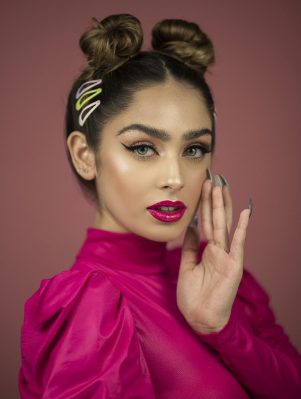
Iron Deficiency and Skin: Is Your Skin Trying to Tell You Something?
Have you been investing in expensive skincare products, yet your skin still looks dull, tired, or uneven? If dark circles refuse to fade and pigmentation keeps returning, the problem may not be your skincare routine—it could be iron deficiency.
Iron deficiency is one of the most common nutritional deficiencies worldwide and affects a significant percentage of Indian women. While most people associate low iron with tiredness, it also has a profound impact on skin health, hair growth, and nail strength.
Let’s understand how iron influences your skin and what you can do to restore your natural glow.
Why Iron Is Essential for Healthy Skin
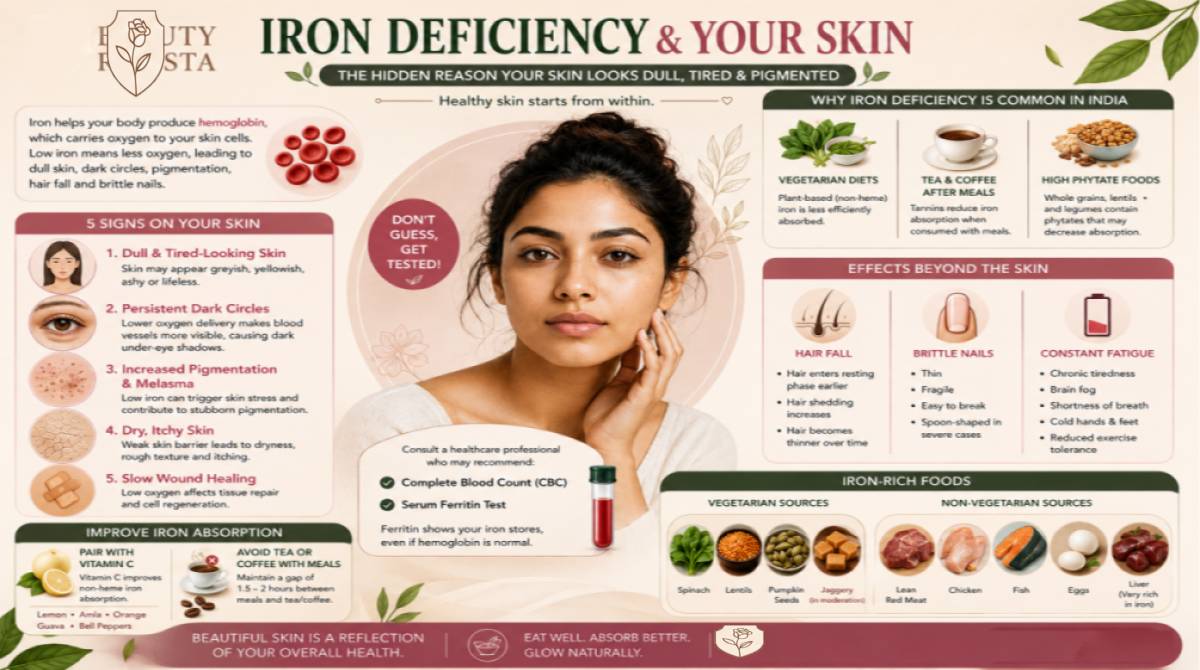
Iron is required to produce hemoglobin, the protein in red blood cells responsible for transporting oxygen throughout the body.
Healthy skin depends on:
- Continuous oxygen supply: Iron is what creates hemoglobin, the part of your blood that carries oxygen around your body. When iron is low, less oxygen reaches your skin. Without enough oxygen, your skin cannot heal or renew itself properly, causing it to lose its natural brightness.
- Collagen Production: Iron helps your body build collagen. Collagen is the invisible scaffolding that keeps your skin firm, bouncy, and smooth. Without enough iron, this scaffolding weakens, leading to fragile skin and earlier wrinkling.
- Efficient skin cell renewal
- Healthy wound healing
- Strong skin barrier function
When iron levels become low, less oxygen reaches skin tissues. As a result, skin cells cannot function optimally, leading to visible changes in appearance.
Signs of Iron Deficiency on the Skin
1. Dull and Tired-Looking Skin
One of the earliest signs is loss of natural radiance.
Instead of looking healthy and vibrant, the skin may appear:
- Greyish
- Yellowish
- Ashy
- Lifeless
In Indian skin tones, iron deficiency rarely causes obvious paleness. Instead, it steals the warm, healthy glow and replaces it with a tired appearance.
2. Persistent Dark Circles
The skin under the eyes is extremely thin.
When oxygen delivery decreases:
- Blood vessels become more visible
- Under-eye shadows appear darker
- Existing pigmentation becomes more noticeable
If your dark circles don’t improve despite adequate sleep, iron deficiency could be contributing.
3. Increased Pigmentation and Melasma
Healthy skin repairs itself continuously.
Iron deficiency reduces oxygen delivery to skin cells, which may trigger skin stress and contribute to stubborn pigmentation.
Some dermatological studies suggest that correcting nutritional deficiencies may support overall skin recovery alongside appropriate dermatological treatment.
4. Dry, Itchy Skin
Iron deficiency may weaken the skin’s protective barrier.
Symptoms may include:
- Persistent dryness
- Rough texture
- Mild scaling
- Unexplained itching without a visible rash
Because the skin barrier becomes compromised, moisture escapes more easily, leaving skin uncomfortable.
5. Slow Wound Healing
Low oxygen availability affects:
- Tissue repair
- Cell regeneration
Cuts, acne marks, or minor skin injuries may take longer to heal.
Effects Beyond the Skin
Iron deficiency affects much more than appearance.
Hair Fall
Hair follicles require a continuous oxygen supply.
When iron stores become depleted:
- Hair enters the resting phase earlier
- Hair shedding increases
- Hair becomes thinner over time
Low ferritin levels are commonly investigated in individuals experiencing diffuse hair loss.
Brittle Nails
Iron deficiency can cause nails to become:
- Thin
- Fragile
- Easy to break
- Spoon-shaped in severe cases (Koilonychia)
Constant Fatigue
Without adequate iron, oxygen delivery throughout the body decreases.
Common symptoms include:
- Chronic tiredness
- Brain fog
- Shortness of breath
- Cold hands and feet
- Reduced exercise tolerance
Why Iron Deficiency Is Common in India
Several dietary and lifestyle habits can reduce iron intake or absorption:
Vegetarian Diets
Plant-based foods contain non-heme iron, which is less efficiently absorbed than iron from animal sources.
Tea and Coffee After Meals
Tea and coffee contain tannins that significantly reduce iron absorption when consumed with meals.
High Phytate Foods
Whole grains, lentils, and legumes contain phytates that may decrease iron absorption if not properly prepared.
How Is Iron Deficiency Diagnosed?
Do not assume you have iron deficiency based on symptoms alone.
Consult a healthcare professional who may recommend:
- Complete Blood Count (CBC)
- Serum Ferritin Test
Ferritin measures your body’s iron stores and can detect deficiency even when hemoglobin levels remain within the normal range.
Foods Rich in Iron
Vegetarian Sources
- Spinach
- Fenugreek leaves
- Amaranth
- Lentils
- Chickpeas
- Pumpkin seeds
- Jaggery (in moderation)
Non-Vegetarian Sources
- Lean red meat
- Chicken
- Fish
- Eggs
- Liver (very rich in iron)
Improve Iron Absorption Naturally
Simple dietary changes can make a significant difference.
Pair Iron with Vitamin C
Vitamin C improves the absorption of non-heme iron.
Good combinations include:
- Lemon with dal
- Orange with meals
- Amla
- Guava
- Bell peppers
Avoid Tea or Coffee Immediately After Meals
Maintain a gap of 1.5–2 hours between meals and tea or coffee to maximize iron absorption.
Can Skincare Alone Fix Iron Deficiency?
No.
While moisturizers, serums, vitamin C, niacinamide, and sunscreen support healthy skin, they cannot correct a nutritional deficiency.
If iron deficiency is contributing to your skin concerns, treating the underlying deficiency under medical supervision is essential.