Understanding the connection between cortisol and skin health is essential for maintaining a naturally radiant complexion. Cortisol, often called the body’s primary stress hormone, plays an important role in metabolism and the body’s response to stress. However, when cortisol levels remain elevated for prolonged periods, they may contribute to acne, dullness, dehydration, sensitivity, inflammation, and premature signs of skin aging.
In this guide, we’ll explain how stress hormones affect skin health, explore common causes of elevated cortisol, and share nourishing DIY skincare recipes using Beauty Resista botanical oils and essential oils to support a healthier-looking complexion.
Skin is often one of the first areas where stress becomes visible. Persistent stress and high cortisol levels may contribute to acne, dullness, dryness, inflammation, sensitivity, and signs of premature aging. Over time, the skin barrier may weaken, making the skin appear tired, irritated, and less radiant.
One of the most common reasons for increased cortisol levels is chronic emotional stress. Mental fatigue, anxiety, and constant pressure can stimulate excess oil production in the skin, often leading to clogged pores and breakouts. Stress-related inflammation may also make the skin more reactive and sensitive.
Lack of proper sleep is another major contributor to high cortisol levels. During sleep, the skin naturally repairs and regenerates itself. Poor sleep patterns can interrupt this process, resulting in dull skin, puffiness, dehydration, and early signs of aging. A weakened skin barrier caused by sleep deprivation may also increase dryness and irritation.
Diet can also influence cortisol production. Excessive consumption of sugar, processed foods, and unhealthy fats may trigger inflammation in the body and increase stress responses. This can accelerate collagen breakdown, leading to loss of firmness, uneven texture, and premature fine lines.
Even intense physical activity without proper recovery can elevate cortisol levels. While exercise is beneficial for overall health, overexertion may stress the body and contribute to dehydration and skin sensitivity. Similarly, excessive caffeine intake may overstimulate the nervous system, affecting both stress levels and skin hydration.
Poor gut health is another hidden factor connected to stress and skin concerns. An imbalance in gut health may increase inflammation within the body, which can appear on the skin in the form of acne, redness, eczema flare-ups, or dull complexion.
High cortisol levels can directly affect the skin in several ways. One of the most noticeable effects is increased oil production, which may lead to acne and congestion. Cortisol can also weaken collagen and elastin fibers, causing the skin to lose firmness and elasticity over time. In addition, prolonged stress may damage the skin barrier, making the skin more prone to irritation, dryness, and sensitivity. Healing processes may also slow down, causing acne marks and pigmentation to take longer to fade.
The following DIY skincare recipes are created using lightweight carrier oils, soothing butters, and balancing essential oils from Beauty Resista. These combinations are selected carefully to nourish stressed skin while remaining suitable for acne-prone and combination skin types.
1. Cortisol-Calming Lightweight Face Oil
For Acne-Prone, Sensitive & Stressed Skin
Ingredients:
1 tbsp Jojoba Oil
1 tsp Grapeseed Oil
½ tsp Rosehip Oil
2 drops Lavender Essential Oil
1 drop Geranium Essential Oil
Why This Combination Works:
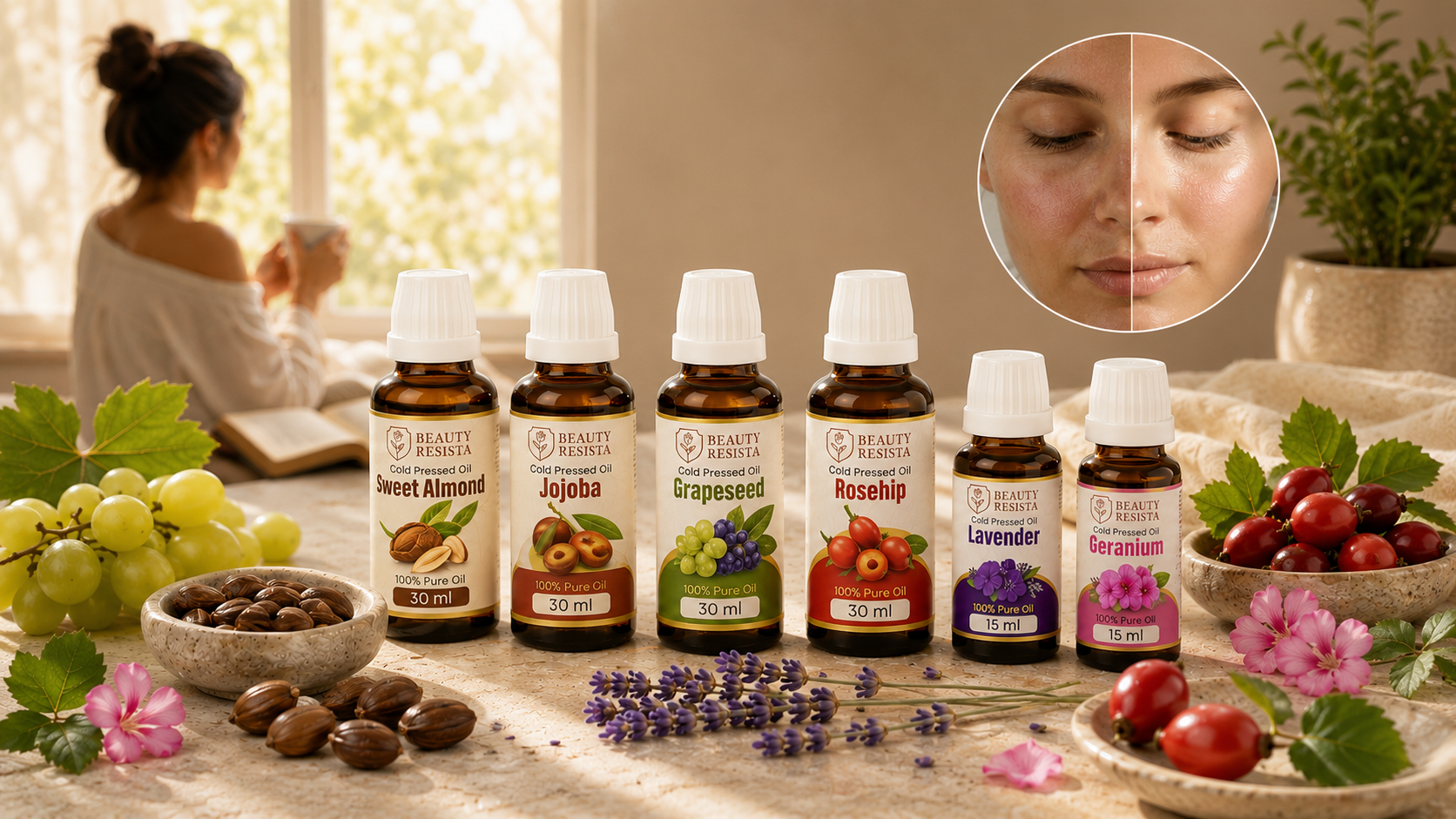
Jojoba oil closely mimics the skin’s natural sebum, helping balance oil production without clogging pores. Grapeseed oil is lightweight and fast-absorbing, making it ideal for oily and acne-prone skin. Rosehip oil supports skin repair and helps improve post-acne marks. Lavender and geranium essential oils help calm stressed, irritated skin.
Benefits:
Lightweight & non-greasy
Helps balance excess oil
Supports skin barrier repair
Soothes stress-related irritation
Promotes healthy glow without heaviness
How to Use:
Apply 2–3 drops on damp skin during nighttime skincare.
2. Non-Comedogenic Stress Relief Moisturizer
For Combination & Dehydrated Skin
Ingredients:
1 tbsp Mango Butter
1 tsp Jojoba Oil
1 tsp Argan Oil
2 drops Frankincense Essential Oil
1 drop Lavender Essential Oil
Why This Combination Works:
Mango butter is lighter compared to heavier butters and helps moisturize without feeling overly greasy. Argan oil provides nourishment while remaining relatively lightweight. Frankincense supports skin elasticity and helps improve the appearance of stressed, tired skin.
Benefits:
Deep hydration without pore congestion
Softens dry patches
Helps improve skin texture
Supports stressed skin barrier
Suitable for dull, tired skin
How to Use:
Use a small amount after cleansing, especially at night.
3. Clarifying Anti-Stress Acne Spot Oil
For Breakouts & Inflamed Skin
Ingredients:
1 tsp Grapeseed Oil
½ tsp Jojoba Oil
1 drop Tea Tree Essential Oil
1 drop Lavender Essential Oil
Why This Combination Works:
Tea tree essential oil is widely known for its clarifying and purifying properties. Grapeseed oil keeps the blend lightweight and suitable for acne-prone skin, while lavender helps calm redness and irritation.
Benefits:
Helps calm active breakouts
Lightweight and fast-absorbing
Reduces appearance of redness
Supports clearer-looking skin
How to Use:
Apply only on affected areas using a cotton swab.
4. Barrier Repair Body Butter
For Dry, Stressed & Sensitive Skin
Ingredients:
1 tbsp Shea Butter
1 tbsp Mango Butter
1 tsp Avocado Oil
1 tsp Almond Oil
2 drops Geranium Essential Oil
2 drops Lavender Essential Oil
Why This Combination Works:
This blend deeply nourishes dry body skin while helping restore softness and comfort. Mango butter keeps the texture smoother and lighter, while lavender and geranium create a calming aromatherapy experience.
Benefits:
Deep nourishment for dry skin
Helps improve rough texture
Supports moisture retention
Calms irritation caused by stress
How to Use:
Apply after shower on slightly damp skin.
5. Overnight Skin Recovery Oil
For Dull & Tired Skin
Ingredients:
1 tsp Rosehip Oil
1 tsp Argan Oil
1 tsp Jojoba Oil
1 drop Frankincense Essential Oil
1 drop Rose Essential Oil
Why This Combination Works:
Rosehip and argan oils help support skin renewal and improve skin texture without feeling too heavy. Rose essential oil adds soothing and calming properties, making the blend ideal for nighttime relaxation rituals.
Benefits:
Supports overnight skin recovery
Improves skin softness
Enhances natural glow
Helps reduce appearance of tired skin
How to Use:
Massage 2–3 drops onto clean skin before bedtime.
Best Non-Comedogenic Oils for Acne-Prone Skin from Beauty Resista
The following oils are generally considered lightweight and less likely to clog pores:
Jojoba Oil
Grapeseed Oil
Rosehip Oil
Argan Oil
Flaxseed Oil
These oils are commonly preferred for oily, acne-prone, and combination skin because they absorb easily and feel lightweight on the skin.
Natural skincare rituals can help create a sense of relaxation while supporting healthier-looking skin. Nourishing ingredients such as almond oil, mango butter, and geranium essential oil are often used in DIY skincare routines to calm stressed skin and improve softness and hydration.